Video 111: Understanding Kidney Tumors!

Understanding Kidney Tumors! What do you know about kidney tumors? A kidney tumor or mass is an abnormal growth in the kidney that requires care and management. Kidney tumors are among the top 10 most common tumors in the body. They can be benign (non-cancerous) or malignant (cancerous). Most kidney tumors show no signs or […]
Video 110: Pelvic Organ Prolapse: Common Questions

Pelvic Organ Prolapse: Common Questions How common is pelvic organ prolapse among women? Nearly 50% of women who have given birth vaginally may experience some degree of pelvic organ prolapse. However, not all cases present with noticeable symptoms. What is the most common symptom of pelvic organ prolapse? The most common symptom is the feeling […]
Video 109: Pelvic Organ Prolapse (POP): Surgery

Pelvic Organ Prolapse (POP): Surgery not all pelvic organ prolapses require surgery, if symptoms are bothersome or negatively impact your quality of life or sexual activities. There are several types of surgeries, which can be recommended. one of the most effective techniques for pelvic organ prolapse repair is the laparoscopic approach, especially sacrocolpopexy. In this […]
Video 108: How to Do Kegel Exercises!

How to Do Kegel Exercises! Find the Correct Muscles: It is important to target the correct muscles for Kegel exercises. How can you find them? Pretend that you want to stop urine flow and, at the same time, prevent the passage of gas. These are the muscles that should be engaged during Kegel exercises. Practice […]
Video 107: Strengthen Your Pelvic Floor with Kegel Exercises!

Strengthen Your Pelvic Floor with Kegel Exercises! – Kegel exercises are simple moves that strengthen pelvic floor muscles, supporting uterus, bladder, vagina, and the rectum. Why Do Kegel Exercises? 1. Reduce Urine Leaks – Kegel exercises help to prevent or reduce urine leak or urinary incontinence. 2. Prevent Pelvic Organ Prolapse – Stronger pelvic floor […]
Video 106: Pelvic Organ Prolapse Causes & Prevention! 2

Pelvic Organ Prolapse: Causes & Prevention! There are both preventable and non-preventable causes of pelvic organ prolapse. Non-preventable causes include: Multiple or complicated vaginal deliveries Aging Congenital factors Preventable causes include: Being overweight Chronic constipation Persistent coughing Frequent heavy lifting Smoking To prevent pelvic organ prolapse, focus on avoiding preventable factors and, importantly, practice regular […]
Video 105: Pelvic Organ Prolapse Know the Symptoms! 1

Pelvic Organ Prolapse: Know the Symptoms! In many cases, Pelvic Organ Prolapse does not show any obvious signs. However, if it is advanced, it may cause some symptoms. The most common symptom? Feeling or even seeing a bulge in the vagina. Other symptoms include: A feeling of heaviness or dragging sensation in the vagina. […]
Video 104: Pelvic Organ Prolapse POP
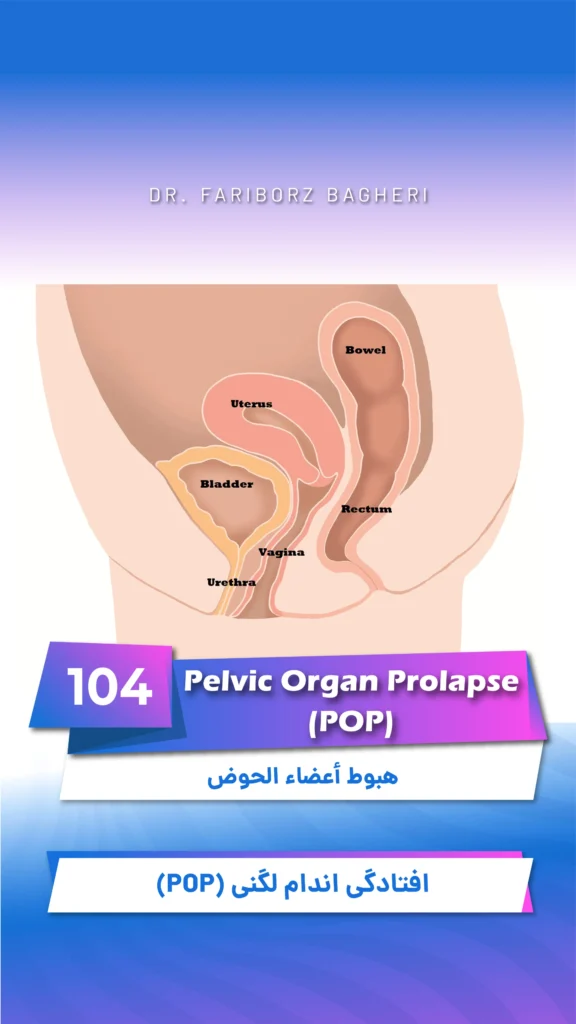
Pelvic Organ Prolapse (POP) The female pelvis contains important organs such as the bowel, rectum, uterus, vagina, bladder, and urethra, all supported by pelvic muscles and tissues. Weakening of these pelvic muscles can result in the dropping, descent, or bulging of any of these organs into the vagina, a condition known as Pelvic Organ Prolapse […]
Video 103: Women’s Urology: Essential Tips!

Women’s Urology: Essential Tips! What every woman should know about her urological health: Stay Hydrated and Urinate Often: Drink water every 2 hours and empty your bladder every 3 to 4 hours to reduce the risk of infections. Practice Safe Hygiene: After using the bathroom, always wipe from front to back, and after any intercourse, […]
Video 102: Prostate Surgeries – Common Questions

Does every enlarged prostate need surgery? Not at all. Many cases can be managed without surgery. Which prostate surgery is the best? It depends on your symptoms, age, prostate size, sexual activity, and personal preference. Do all prostate surgeries result in urine leakage? Not at all. Urine leakage is rare, especially when surgery is performed […]